Football has always been more than just 90 minutes on the pitch. It brings together passion, pride, politics, and emotions in a way that few sports ever can. That reality was on full display after Iran’s World Cup campaign came to an end, not because of what happened on the field, but because of what was said afterward.
Following Iran’s elimination from the tournament, a senior U.S. government official, Markwayne Mullin, publicly celebrated the team’s departure from the competition. His comments quickly grabbed attention across the football world.
Speaking during a World Cup security briefing, Mullin said he was “so happy” Iran were out of the tournament and joked that he may have “sung a song or two” and even “danced a happy dance” after the team left the United States.
For many football fans, those remarks felt unusual. Rival supporters celebrating another team’s exit is part of football culture. Government officials doing the same is something entirely different.
A Tournament Played Under Extraordinary Circumstances
Iran’s road to the World Cup was unlike that of almost every other nation. In the months before the tournament, their participation was uncertain after military tensions involving the United States and Israel dramatically changed the political landscape.
Even after qualifying, the challenges didn’t stop.
Iran had originally planned to base themselves in Tucson, Arizona, but instead relocated their training camp to Tijuana, Mexico. Every match required crossing the border into the United States before returning immediately afterward.
Despite all of that, Iran refused to roll over.
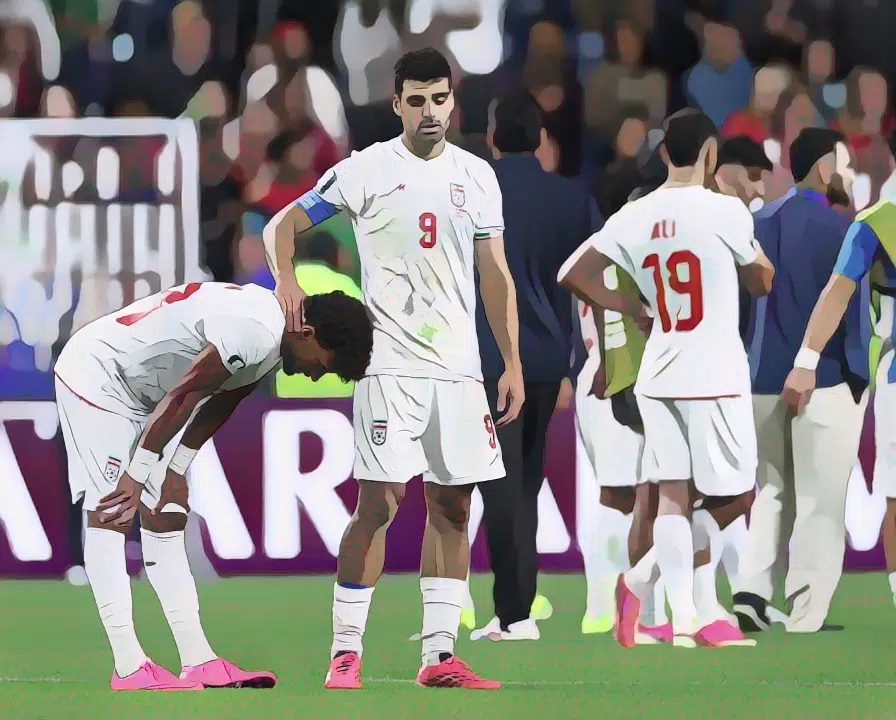
Three group-stage matches. Three draws. They stayed alive until the very end and were heartbreakingly denied victory against Egypt by a razor-thin offside decision. Sometimes football is decided by inches, and this was one of those cruel moments that every supporter knows too well.
Iran’s Frustration Off the Pitch
Iran’s football federation repeatedly complained about how the team was treated during the tournament.
Head coach Amir Ghalenoei described his squad as the “most oppressed” team at the World Cup, arguing that the travel arrangements and security restrictions placed additional pressure on his players.
According to Mullin, the immediate departures after each match were part of an agreement reached with FIFA before the tournament began. He explained that once games ended, the team returned directly to their base camp in Mexico rather than remaining in the United States.
While officials viewed it as a security arrangement, many Iranian supporters felt the restrictions singled out their national team.
Football Fans See It Differently
As football supporters, it’s impossible not to look at this story from several angles.
One group believes politics and international security inevitably influence global sporting events. From that perspective, governments have responsibilities that extend far beyond football.
Another group argues just as passionately that once the whistle blows, football should belong to the players and the fans—not politicians. They believe every qualified nation deserves to compete under equal conditions regardless of diplomatic tensions.
Then there are the neutral supporters.
Many simply watched a hardworking Iranian team battle through difficult circumstances, earning three draws and coming within inches of advancing. Whether you supported Iran or not, their resilience on the pitch earned respect.
The Bigger Picture
World Cups create unforgettable memories because they unite countries that rarely meet under peaceful circumstances. The beauty of football lies in moments where rivals shake hands after fierce battles, fans celebrate incredible goals together, and the game briefly becomes bigger than politics.
Stories like this remind us that football doesn’t exist in a bubble. International events inevitably bring political realities into the spotlight.
But perhaps that’s why supporters continue to defend the spirit of the game so fiercely.
At its best, football isn’t about governments celebrating eliminations or political statements after the final whistle. It’s about players giving everything for their country, supporters singing until their voices disappear, and moments that stay with us for decades.
Iran may be out of the World Cup, but the conversation surrounding their tournament is likely to last much longer than their campaign itself. And whether you see this as a security issue, a political controversy, or simply another dramatic chapter in World Cup history probably depends on which side of the stadium you’re sitting.